As we navigate the complexities of modern health, one molecule consistently emerges at the forefront of cellular research: Nicotinamide Adenine Dinucleotide, or NAD+. This indispensable coenzyme, present in every living cell, plays pivotal roles in converting the food we eat into usable energy and maintaining cellular integrity. Its significance extends across numerous biological processes, making it a critical focus for those interested in optimizing health and understanding the mechanisms of aging.
The Foundational Role of NAD+ in Cellular Function
NAD+ is far more than just another biochemical component; it’s a fundamental player in the symphony of cellular life. Chemically speaking, it’s a dinucleotide, meaning it’s composed of two nucleotides joined by their phosphate groups. Its primary functions are twofold: facilitating electron transfer during metabolism and serving as a vital substrate for enzymes involved in cellular signaling and maintenance.
In its role as an electron carrier, NAD+ is crucial for “redox” (reduction-oxidation) reactions. It cycles between its oxidized form (NAD+) and its reduced form (NADH), accepting and donating electrons. This dynamic interconversion is central to cellular respiration, particularly in processes like glycolysis and the citric acid cycle, where it helps extract usable energy from nutrients to synthesize adenosine triphosphate (ATP) – the body’s primary energy currency.
Beyond energy production, NAD+ acts as a cofactor for a growing array of non-redox enzymes, including sirtuins and poly(ADP-ribose) polymerases (PARPs). These enzymes consume NAD+ to regulate crucial cellular processes such as DNA repair, gene expression, and stress responses. This makes NAD+ a central regulator influencing metabolic pathways, chromatin remodeling, and even immune cell function.
From Intake to Impact: The Journey of NAD+ in the Body
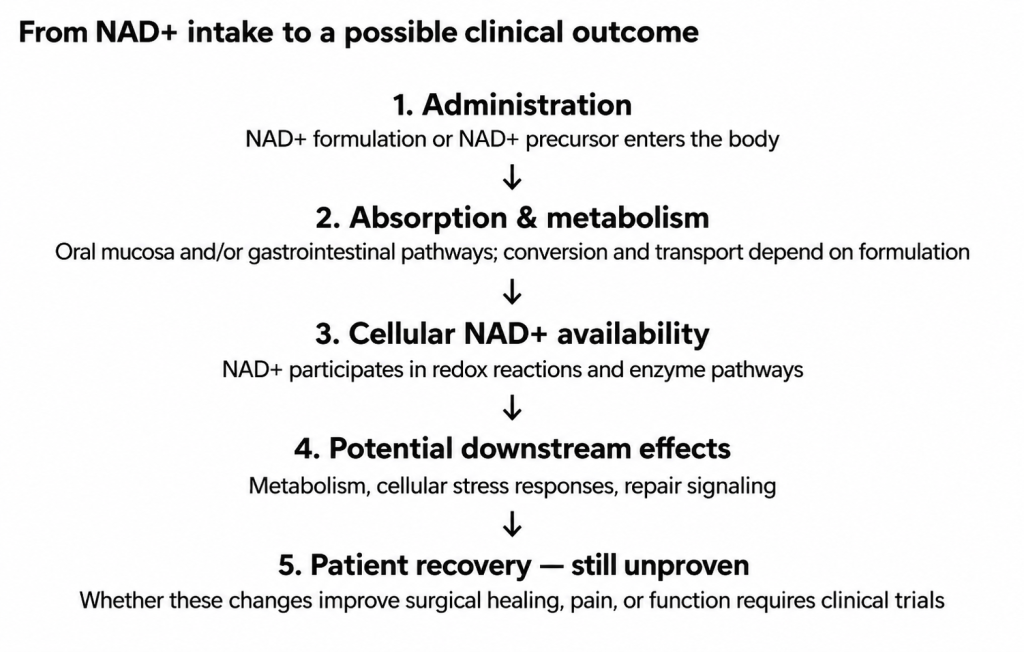
The journey of NAD+ from external intake to cellular impact is a multi-step process. Understanding this pathway is essential for appreciating the nuances of NAD+ supplementation and its potential effects.
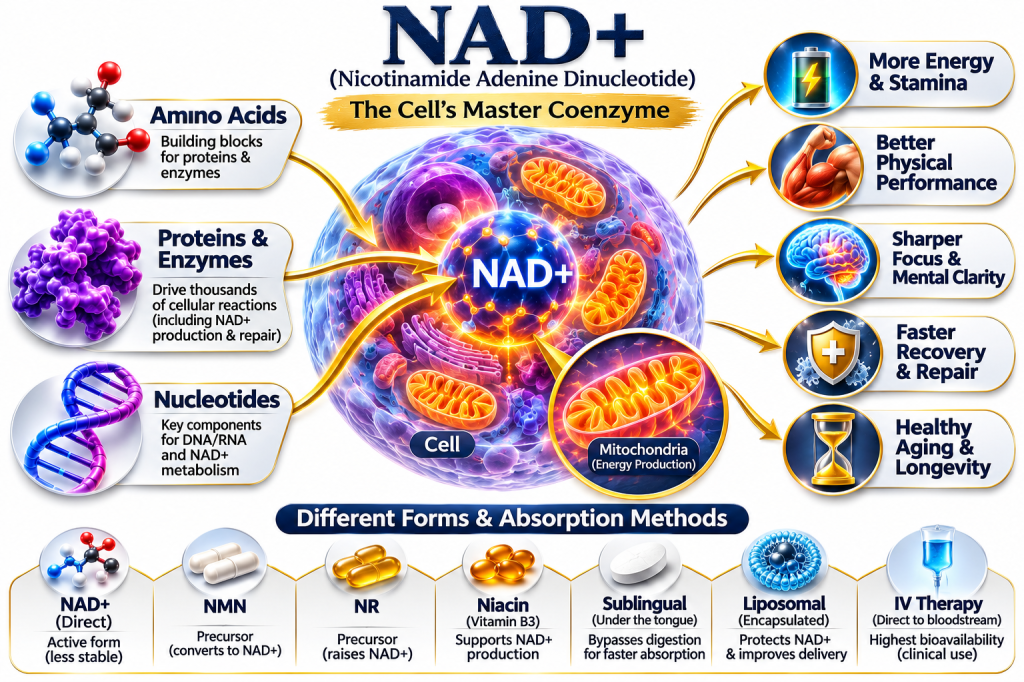
- Administration: NAD+ can be introduced into the body either directly as NAD+ formulations or, more commonly, as NAD+ precursors. These precursors are smaller molecules that the body converts into NAD+. The most studied oral precursors as of 2026 include Nicotinamide Riboside (NR) and Nicotinamide Mononucleotide (NMN). Other precursors like Nicotinic Acid (NA), Nicotinamide (NAM), and Tryptophan also contribute to NAD+ biosynthesis.
- Absorption & Metabolism: Once administered, precursors like NR and NMN are efficiently absorbed through various pathways, including oral mucosa and gastrointestinal routes. They then undergo conversion within the body to become NAD+. For instance, NR is considered highly efficient, bypassing certain rate-limiting steps in the NAD+ biosynthetic pathway. Clinical studies consistently show that oral supplementation with NR or NMN can reliably raise blood NAD+ levels in humans, often doubling them at doses around 1,000 mg within about two weeks. However, the distribution of NAD+ augmentation can be organ-specific and depend on the route of administration, with some studies in mice indicating a predominant increase in liver NAD+ levels following NMN administration.
- Cellular NAD+ Availability: Once synthesized, NAD+ becomes available within cells to participate in a myriad of biochemical reactions. It fuels redox reactions crucial for energy generation and acts as a necessary cofactor for NAD+-consuming enzymes like sirtuins and PARPs, which are vital for cellular signaling and maintenance.
- Potential Downstream Effects: The availability of NAD+ has wide-ranging potential downstream effects. These include supporting healthy metabolism, enhancing cellular stress responses, and bolstering repair signaling. When NAD+ levels are optimal, cells efficiently produce energy, maintain proper function, and regulate metabolic processes. Conversely, declining NAD+ levels, which naturally occur with age, can lead to reduced energy efficiency and impaired cellular functions.
- Patient Recovery – Still Testing: While the foundational biology of NAD+ is well-established, whether these cellular changes directly translate into improved clinical outcomes such as surgical healing, pain reduction, or enhanced function in humans still requires robust clinical trials. A systematic review of 100+ studies found many variations, goals, and outcomes – which means that while there are numerous positive biological responses, we cannot make definitive anti-aging or longevity claims yet. Furthermore, the applied science itself is still in its early stages: researchers are only now figuring out how to stabilize the molecule so it can be produced, stored, shipped, consumed, and absorbed (bioavailability) in a consistent and sustainable manner.
Investigating NAD+’s Influence on Key Biological Pathways
The scientific community continues to investigate NAD+’s involvement in several key biological pathways, each offering a unique lens through which to understand its broader impact on health and recovery:
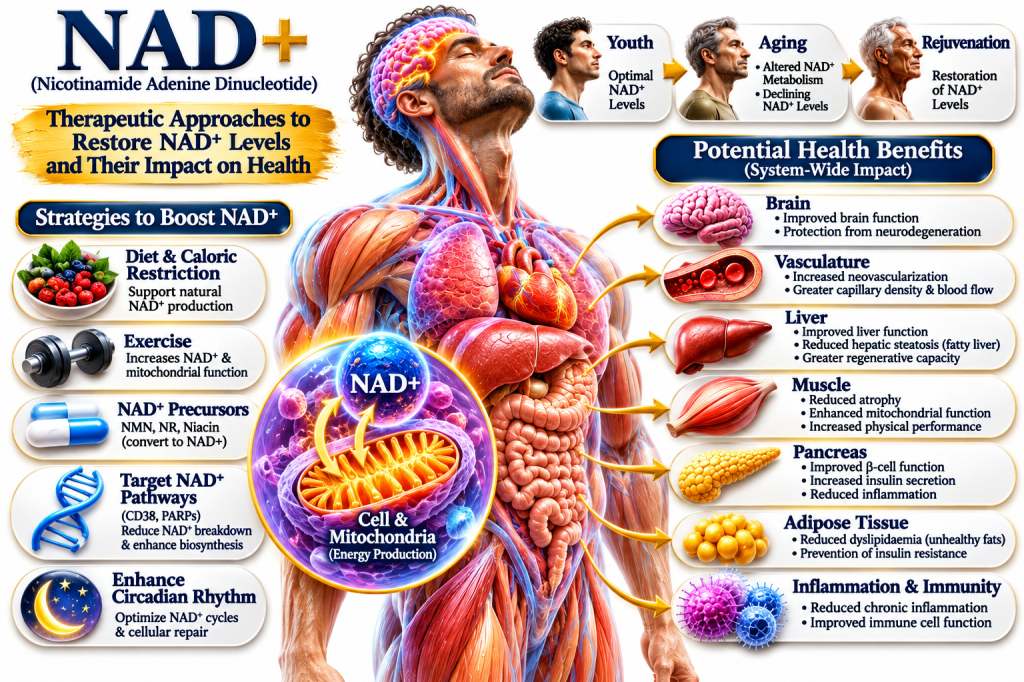
- Energy Metabolism: Muscle activity and tissue maintenance are energy-intensive processes that rely heavily on cellular energy. NAD+ is central to how muscles generate and utilize energy, assisting in the conversion of nutrients into ATP. This critical role means every muscle contraction and recovery phase is NAD+-dependent. Studies suggest that NAD+ precursors can influence muscle health and physical performance, particularly when NAD+ metabolism is already under strain, such as in older adults. For instance, exercise-trained older adults have shown NAD+ levels similar to young individuals, indicating that an active lifestyle may help maintain these levels.
- Sirtuin Signaling: Sirtuins are a family of seven proteins often dubbed “guardians of the genome” due to their critical roles in cell metabolism and gene expression. They are NAD+-dependent deacylases, meaning they require NAD+ to function. Sirtuins are involved in stress responses, metabolic regulation, DNA repair, and even circadian rhythm regulation. Their activity is crucial for maintaining cellular homeostasis, and age-dependent declines in NAD+ levels can impair sirtuin function, potentially contributing to mitochondrial dysfunction and cellular damage.
- PARP/DNA Repair: Poly (ADP-ribose) polymerases, or PARP enzymes, are vital for cellular responses to DNA damage. NAD+ serves as a required fuel for these enzymes, which detect and repair DNA damage. When DNA damage accumulates, for example, with age, PARPs consume more NAD+, which is a significant factor in age-related NAD+ decline. While the biochemical mechanism of NAD+ fueling PARP-mediated DNA repair is “textbook-solid,” whether supplementing with NAD+ precursors measurably improves DNA repair in healthy humans remains unproven by human trials as of 2026.
- Inflammatory Signaling: Persistent inflammation can significantly interfere with recovery processes and is a hallmark of “inflammaging” – the chronic, low-grade inflammation that develops with age. NAD+ plays a key role in regulating the inflammatory response, powering sirtuin enzymes (like SIRT1 and SIRT6) that suppress inflammatory signaling by deacetylating NF-κB, a master regulator of inflammatory gene expression. When NAD+ levels are adequate, inflammatory responses are better regulated. Research indicates that age-related NAD+ decline both contributes to and results from chronic inflammation. Early studies suggest that boosting NAD+ with precursors like nicotinamide riboside (NR) can lower inflammatory markers.
- Mitochondrial Function: Mitochondria are the “powerhouses” of the cell, essential for muscle health and rehabilitation. NAD+ is critical for cellular energy production, particularly within the mitochondria, where it helps convert glucose and fatty acids into ATP. Declining NAD+ levels can impair mitochondrial function, leading to reduced energy and overall cellular dysfunction. Research strongly suggests that maintaining healthy NAD+ levels supports mitochondrial biogenesis and function, which is crucial for muscle health, recovery, and resilience. Studies have shown positive correlations between NAD+ levels and mitochondrial respiration and muscle functioning, with trained older adults exhibiting better NAD+ and mitochondrial health.
The Nuance of NAD+ Supplementation: Local vs. Systemic Effects
A crucial point underscored by the science is that raising NAD+ in the bloodstream does not automatically guarantee a proportional increase in NAD+ within specific tissues, such as knee ligaments, cartilage, or muscle. This highlights a significant challenge in NAD+ research and therapeutic development: achieving targeted delivery and understanding tissue-specific NAD+ levels. The heterogeneity in trial designs and inconsistent biomarker assessments further complicate the interpretation of broad clinical applications. Researchers are actively exploring novel delivery methods and the pharmacokinetics and pharmacodynamics (how different NAD+ boosters are absorbed, distributed, and act inside target tissues) to overcome these hurdles.
The Path Forward: Clinical Trials and Future Prospects in 2027
As of 2026, while the scientific understanding of NAD+ and its cellular mechanisms is robust, the translation to definitive human clinical outcomes for general wellness and anti-aging remains an area of ongoing investigation. Rigorous, doctor-led clinical trials are the gold standard for establishing safety and efficacy. Numerous studies are underway, focusing on various NAD+ based on my review of over 100 clinical trials, active patents, and emerging biotech innovations, the true future of NAD+ comes down to one foundational breakthrough: molecular stability.
Right now, the industry is focused on branding and consumer reach, leaving us limited to inconvenient or indirect formats – IV drips, injections, and precursor pills. We still have a long way to go before cellular optimization becomes as effortless as tearing open a powdered electrolyte sachet, mixing it into water, and feeling an immediate, clean lift – rivaling the convenience of coffee or energy drinks without the crash.
Imagine ripping open a packet, stirring it into water, and giving your cells the equivalent of turning back the clock ten years.
That is my personal quest: tracking down the scientists, labs, inventors, and patents capable of formulating and delivering NAD+, peptides, and botanicals in their most potent, stable, and bioavailable forms – with minimal side effects and zero friction.
Join the Conversation: If you are following the science of NAD+, peptides, and next-gen cellular delivery – or you’re an inventor, researcher, or biohacker exploring this frontier – come join our NAD+ & Peptides™ Facebook Group. We share clinical breakdowns, patent discoveries, and real-world insights as this field evolves.
Here’s the link:
Well – that’s it for now, folks – catch you in the group or on the next post.
Cheers to health & wealth,
~ Sidhartha, Esq.
Lawyer, Researcher, Publisher, and Biohacker
Disclaimer: No Medical Advice, Claims, or Recommendations Contained In This Post – It is for entertainment and educational purposes only.

Leave a Reply