By: Sid Peddinti, Esq.
Lawyer Turned Biohacker, Truthseeker, and Investigative Researcher
Decoding NAD+: Your Cellular Guardian for Organ Longevity
As a lawyer, biohacker, investigative journalist, and publisher deeply immersed in the intersection of law, science, and longevity, few topics spark my interest quite like Nicotinamide Adenine Dinucleotide (NAD+).
The scientific and biohacking communities are buzzing with discussions about this crucial coenzyme. It’s a vital molecule found in every cell of your body, essential for converting the food you eat into usable energy, repairing DNA, and protecting vital organs like your brain, heart, liver, and muscles from age-related decline.
The steady decline of NAD+ levels as we age is a significant focus of cutting-edge longevity research, and understanding its role is key to optimizing your healthspan.
My goal here is to cut through the noise, offering you a technical yet plain-English breakdown of why NAD+ is so important for organ longevity, backed by the latest clinical trials, patent insights, and a clear-eyed view of what the science truly supports today.
Disclaimer: Everything presented on this page is my personal research for my own biohacking experiments and should not be considered medical or scientific advice. No claims are made.
What Exactly is NAD+ and Why Does It Matter for Your Longevity?
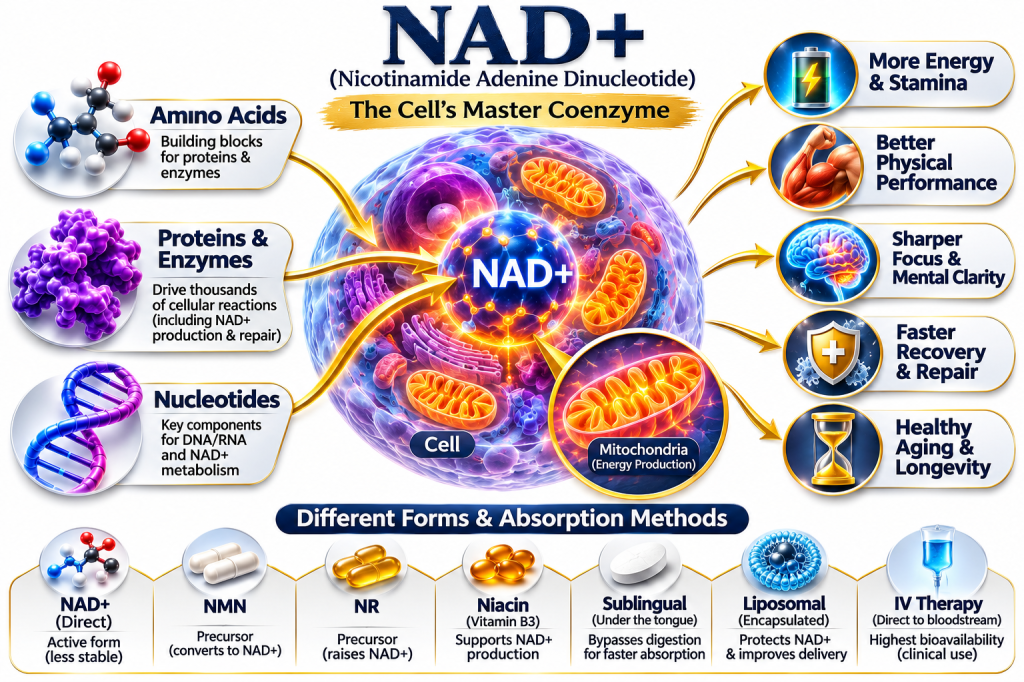
Think of NAD+ as the unsung hero within your cells. Formally known as nicotinamide adenine dinucleotide, it’s a critical coenzyme present in every single living cell. Its primary role is fundamental to life itself: facilitating hundreds of metabolic processes that convert the nutrients from your food into adenosine triphosphate (ATP) – the essential energy currency your cells use to function.
But NAD+’s importance extends far beyond energy production. It plays a pivotal role in maintaining cellular health through two other critical functions:
- DNA Repair: Our DNA is constantly under attack from environmental stressors and normal cellular wear and tear. NAD+ is a crucial fuel source for a family of enzymes called Poly(ADP-ribose) polymerases (PARPs), which are the cellular repair crew for damaged DNA. Without sufficient NAD+, this critical repair system falters, leading to genomic instability.
- Sirtuin Activation: Often dubbed the “guardians of the genome” or “longevity genes,” sirtuins are a family of proteins that rely on NAD+ to regulate key cellular functions. These include metabolism, inflammation, antioxidant defenses, and the body’s response to stress. By activating sirtuins, NAD+ helps maintain cellular balance and resilience, which is directly linked to healthier aging.
The challenge, and why NAD+ has become such a hot topic in longevity circles, is that its levels naturally decline as we age. This age-related drop is believed to contribute to a cascade of cellular dysfunctions, impacting mitochondrial health, impairing DNA maintenance, and slowing sirtuin activity.
While some recent large-scale studies in 2026 have suggested that whole-blood NAD+ levels might remain stable in healthy, physically active individuals, the evidence overwhelmingly points to a decline in NAD+ levels within specific tissues and organs, such as the brain, liver, and muscles, with advancing age. I wanted to explore the specific applications and impact of NAD+ on various organs, namely – Brain, Heart, Liver, and Muscle tissue. Let’s dive in.
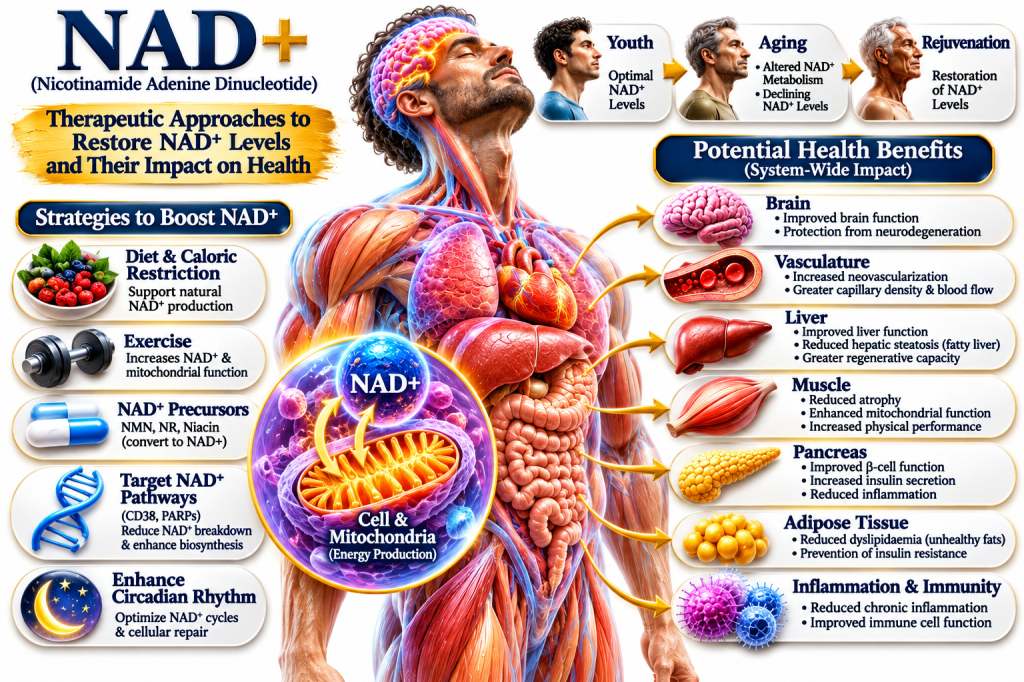
NAD+’s Multi-Organ Protection: Brain, Heart, Liver, and Muscle Tissue
The broad impact of NAD+ means it’s a central player in maintaining the health and longevity of our most vital organs:
Brain Health and Cognitive Function
Our brains are incredibly energy-intensive organs, and NAD+ is crucial for fueling neuronal activity and maintaining cognitive function. NAD+ depletion is detected in major neurodegenerative diseases like Alzheimer’s and Parkinson’s. Preclinical models have consistently shown that restoring NAD+ levels can improve mitochondrial function, reduce oxidative and inflammatory stress, and protect neurons against age-related challenges. While these animal studies are promising, human trials in 2026 are still evolving. Oral NAD+ precursors like Nicotinamide Riboside (NR) and Nicotinamide Mononucleotide (NMN) have been shown to increase brain NAD+ levels significantly in healthy adults.
Early human trials suggest some modest improvements in processing speed and executive function in older adults with low baseline NAD+ or metabolic risks. A 2024 randomized controlled trial even found that NMN supplementation improved reaction time scores by 14.6% and working memory by 11.2% in older adults after 12 weeks. However, robust evidence for preventing dementia or producing large cognitive gains in healthy young adults remains to be established.
Cardiovascular Health
The heart, a tireless muscle, also heavily relies on NAD+ for its immense energy demands. NAD+ depletion has been linked to cardiovascular disease, emphasizing its critical role in heart health. Promisingly, a 2026 single-center clinical trial involving 180 adults with heart failure due to ischemic cardiomyopathy reported that intravenous (IV) NAD+ supplementation modestly improved ejection fraction (a measure of heart function) at one month. Other human trials have indicated that NAD+ precursors can lead to modest improvements in metabolic parameters like blood pressure and arterial stiffness in certain populations.
Liver Metabolism and Detoxification
The liver is a metabolic powerhouse, handling everything from nutrient processing to detoxification. NAD+ is deeply involved in these complex pathways. Research, particularly in animal models, suggests that NAD+ modulation can significantly remodel tissue metabolism. For instance, administration of NMN and NR has been shown to influence lipid metabolism, inflammatory pathways, and mitochondrial function in models of non-alcoholic fatty liver disease (NAFLD). Human studies, while still emerging, have indicated mild improvements in liver fat in individuals with fatty liver disease.
Muscle Function and Endurance
Our muscles require constant energy for movement, repair, and growth. NAD+ levels decline with age in skeletal muscle, a factor linked to muscle loss (sarcopenia) and reduced physical function. Interestingly, both regular exercise and NAD+ precursors appear to positively influence muscle NAD+ biology. Recent studies in 2026 have found that five months of NR supplementation reduced muscle biological age by approximately 2.5 years in a cohort of adults. This suggests that boosting NAD+ could be a valuable strategy for maintaining muscle health and performance as we age, complementing the benefits of physical activity.
Clinical Trials and the Evolving Trials
As an investigative journalist, I always scrutinize the evidence. There’s a significant distinction between compelling preclinical (animal and cell culture) studies and robust human clinical trials. While animal studies often demonstrate “miraculous” benefits from NAD+ augmentation, the translation to humans is still a journey.
As of 2026, the human clinical trial landscape offers nuanced but encouraging findings:
- Safety and Efficacy of Precursors: Human trials consistently show that oral NAD+ precursors, specifically nicotinamide riboside (NR) and nicotinamide mononucleotide (NMN), are generally safe and well-tolerated at studied doses. More importantly, they reliably increase cellular NAD+ levels in the blood and various tissues.
- Metabolic and Cellular Benefits: Some studies point to modest but meaningful metabolic improvements, such as enhanced insulin sensitivity (notably in postmenopausal women with prediabetes), and reductions in blood pressure and arterial stiffness.
- Fatigue and Cognition: Many participants report subjective improvements in perceived fatigue, and some smaller trials indicate slight improvements in processing speed or executive function, particularly in older adults.
- The Nuance of IV NAD+: While intravenous NAD+ infusions are popular in wellness clinics, current rigorous randomized controlled trials demonstrating specific anti-aging or wellness *outcomes* from IV NAD+ itself are limited or inconclusive. The biological mechanism is well-described, and many patients report subjective benefits, but gold-standard outcome evidence isn’t fully there yet for direct IV administration. It’s important to differentiate between merely raising NAD+ levels and proving a significant clinical outcome.
The consensus among longevity experts in 2026 is to approach NAD+ supplementation with a measured perspective. While it’s not a “magic bullet,” it’s a promising tool for supporting cellular health, especially when combined with a healthy lifestyle. The growing trend of personalized longevity protocols now includes NAD+ testing to establish baseline levels and track responses, moving towards more evidence-based and data-driven health optimization.
Frequently Asked Questions About NAD+ and Tissue Function
1. What exactly is NAD+?
NAD+ stands for Nicotinamide Adenine Dinucleotide. It’s not a vitamin or a standalone nutrient but rather a coenzyme that exists in two primary forms: NAD+ (the oxidized form, ready to accept electrons) and NADH (the reduced form, carrying electrons). This cycling between its oxidized and reduced states is fundamental to nearly all biological processes.
2. Why is NAD+ considered so vital for cellular function?
NAD+ is indispensable because it plays dual, critical roles. First, it acts as an electron carrier, transferring electrons during metabolic reactions to convert the food we eat into adenosine triphosphate (ATP) – the primary energy currency of your cells. Second, NAD+ serves as a crucial substrate, or fuel, for several key enzymes involved in cellular maintenance, DNA repair, and stress responses.
3. How does NAD+ contribute to cellular energy production?
In the mitochondria, often called the “powerhouses of the cell,” NAD+ is a central player in both glycolysis and the citric acid cycle (also known as the Krebs cycle). During these processes, NAD+ accepts electrons, becoming NADH. NADH then delivers these electrons to the electron transport chain, where they are used to generate the vast majority of cellular ATP. Without sufficient NAD+, this critical energy production slows down, impacting overall cellular vitality.
4. What are sirtuins, and how are they linked to NAD+?
Sirtuins are a family of seven NAD+-dependent enzymes (SIRT1-SIRT7) often referred to as “longevity genes.” They regulate gene expression, DNA repair, mitochondrial function, and metabolic balance by removing acetyl groups from proteins. Sirtuins require NAD+ as a co-substrate to function properly, meaning their activity directly depends on NAD+ availability. A decline in NAD+ levels can therefore compromise sirtuin activity, potentially accelerating aspects of the aging process.
5. What is the role of NAD+ in DNA repair?
NAD+ is essential for DNA repair mechanisms. It fuels enzymes called Poly(ADP-ribose) polymerases (PARPs), which detect and repair DNA damage. Given that our cells face thousands of DNA damage events daily, NAD+’s role in maintaining genomic integrity is critical for cellular health and preventing the accumulation of errors that can lead to dysfunction and aging.
6. How do NAD+ levels change with age, and what are the implications?
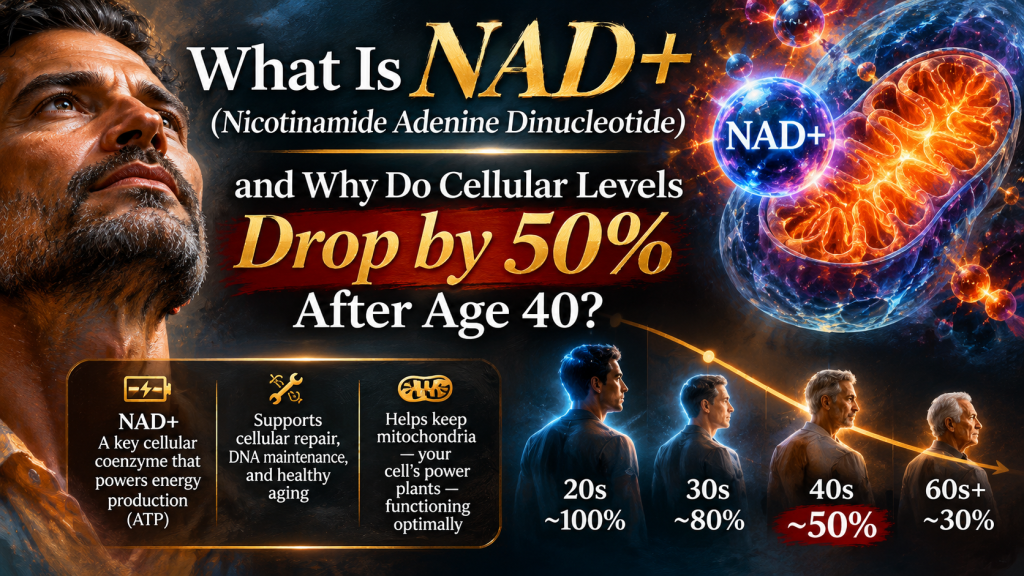
It’s a well-established scientific consensus that NAD+ levels naturally decline with age across most tissues, including the brain, heart, liver, and muscle. This decline can be significant, with levels potentially dropping by as much as 50% between early adulthood and age 60, and even further by age 70. Lower NAD+ levels are linked to reduced energy metabolism, impaired DNA repair, and decreased sirtuin activity, all of which contribute to the cellular wear and tear associated with biological aging.
7. What is NAD+’s specific impact on brain function and health?
The brain is one of the most metabolically active organs, consuming a significant portion of the body’s energy. NAD+ is vital for mitochondrial energy production in neurons, supporting ATP synthesis for neurotransmission and maintaining ion gradients. A decline in brain NAD+ levels, which can be approximately 50% between ages 30 and 70, is associated with reduced mitochondrial ATP production and impaired DNA repair in neurons. Research indicates that restoring NAD+ can improve mitochondrial function, reduce oxidative and inflammatory stress, protect neurons, and potentially mitigate the progression of neurodegenerative diseases like Alzheimer’s and Parkinson’s in preclinical models. People exploring NAD+ therapy often report improved focus, sharper thinking, and reduced brain fog, likely connected to enhanced cellular energy availability.
8. How does NAD+ influence heart health?
The heart is an extremely energy-intensive organ, beating roughly 100,000 times a day and demanding more energy per gram than almost any other tissue. NAD+ is critical for fueling the abundant mitochondria in cardiomyocytes (heart muscle cells) to generate the ATP needed for continuous contraction and relaxation. Declining NAD+ levels in the heart, which can drop by up to 50% between ages 40 and 60, weaken these protective mechanisms, leaving the heart vulnerable to energy deficits, oxidative stress, and damage. Studies suggest that NAD+ supports DNA repair, strengthens antioxidant defenses, and regulates inflammation, all crucial for preserving cardiac function. Research in aged female mice, for instance, showed that the NAD+ precursor NR prevented age-related cardiac enlargement and reprogrammed disrupted circadian rhythms in heart genes.
9. What role does NAD+ play in liver function?
The liver is a metabolic powerhouse, involved in detoxification, nutrient processing, and energy storage. While not as extensively detailed in the provided snippets as brain, heart, and muscle, NAD+’s fundamental role in cellular energy metabolism (Krebs cycle, electron transport chain) means it is indispensable for the liver’s numerous functions. NAD+-dependent sirtuins, particularly SIRT1, are known to regulate hepatic glucose production and systemic metabolic control, further highlighting NAD+’s indirect yet crucial influence on liver health and metabolic homeostasis. Ongoing clinical trials are also targeting liver disease with NAD+ augmentation strategies.
10. Why is NAD+ important for muscle tissue and physical performance?
NAD+ is absolutely central to how muscles generate energy and repair themselves, directly impacting strength, endurance, and recovery. Muscle cells have extraordinary energy demands and are densely packed with mitochondria, making them highly dependent on NAD+ for ATP production through both aerobic and anaerobic pathways. NAD+ also supports the activity of satellite cells, which are critical stem cells involved in muscle repair and regeneration. As with other tissues, muscle NAD+ levels decline with age, contributing to sarcopenia (age-related muscle loss and weakness) and reduced physical abilities. Exercise is a reliable way to support muscle NAD+ biology, and precursors show promise in improving muscle insulin sensitivity and mitochondrial function.
11. Can NAD+ levels be increased, and how?
Yes, NAD+ levels can be influenced. The body synthesizes NAD+ from dietary precursors like tryptophan and niacin (Vitamin B3). Oral supplementation with NAD+ precursors such as Nicotinamide Riboside (NR) and Nicotinamide Mononucleotide (NMN) have been shown to safely raise NAD+ levels in the blood and tissues in human studies. Regular exercise, quality sleep, a protein-rich diet, caloric moderation, and managing stress are also evidence-based strategies to support healthy NAD+ levels.
12. What are NAD+ precursors, and which ones are most studied?
NAD+ precursors are molecules that the body can convert into NAD+. The most studied precursors in human trials are Nicotinamide Riboside (NR) and Nicotinamide Mononucleotide (NMN). These vitamin B3-related compounds are favored over standard nicotinamide because high doses of the latter can inhibit sirtuin proteins. Research, even in 2026, continues to refine our understanding of their efficacy, optimal dosing, and specific benefits.
13. Are NAD+ supplements or therapies proven to reverse aging?
The science is promising but still in its early stages regarding direct “anti-aging” claims for humans. While animal studies show encouraging effects on metabolism, energy, and markers of aging when NAD+ levels are raised, human studies are smaller and newer. They consistently show that NAD+ levels can be safely raised, but whether this translates to reversing aging, extending lifespan, or treating any specific disease in humans is not yet definitively established. NAD+ is best viewed as a tool to support healthy aging processes, not a “longevity hack” or a cure-all.
14. What are the potential side effects or considerations for NAD+ supplementation?
Oral NAD+ precursors like NR and NMN generally have a well-tolerated safety profile in short-term human studies. However, direct IV NAD+ infusions can sometimes lead to discomforts such as nausea, flushing, abdominal cramping, headache, or sweating, which are typically dose- and rate-dependent. It’s crucial to consult a licensed healthcare provider before starting any NAD+ regimen, especially since IV NAD+ and injectable forms are not FDA-approved finished drug products as of 2026 and are compounded under specific regulations.
15. What does the future hold for NAD+ research and applications?
The research landscape for NAD+ is vibrant and expanding rapidly. Ongoing human clinical trials in 2026 are primarily focusing on neurodegenerative disorders like Alzheimer’s and Parkinson’s, as well as obesity, type 2 diabetes, and liver disease.
The aim is to identify specific individuals most likely to benefit from NAD+ augmentation based on their baseline NAD+ levels, genetic factors, and health status, moving towards a more personalized medicine approach. While general “anti-aging wellness” is not the primary focus of rigorous clinical investigation, the molecule’s foundational role in cellular health ensures continued scientific interest.
16. Why can’t I just eat more NAD+?
NAD+ is a large molecule that is difficult for the body to absorb directly through the digestive tract. Most people use “precursors” like Nicotinamide Riboside (NR) or Nicotinamide Mononucleotide (NMN), which are smaller and can enter cells more easily to be converted into NAD+.
17. At what age should I start worrying about NAD+ levels?
Research shows that NAD+ levels begin to decline significantly in your 30s and 40s. By age 50, levels are typically half of what they were in your 20s. Many longevity experts suggest that the most benefit is seen when intervention starts in middle age.
18. Can exercise increase NAD+?
Yes. Aerobic and resistance exercise are natural ways to boost the enzyme NAMPT, which helps the body recycle NAD+. Exercise is one of the most effective non-supplemental ways to maintain organ longevity.
19. Is NAD+ supplementation safe?
Multiple human clinical trials (such as those by Irie et al. and Dellinger et al.) have shown that NAD+ precursors are generally well-tolerated and safe for human consumption at recommended dosages.
In conclusion, NAD+ is undeniably a foundational molecule for our health and longevity. As a lawyer turned biohacker, I believe a balanced, informed approach – rooted in science and critical evaluation – is essential to navigating the exciting yet often overhyped landscape of anti-aging strategies. The scientific journey continues, and I’ll be here, watching every step.
SOURCES GROUNDED BY GOOGLE AI:

Leave a Reply