By: Sid Peddinti, Esq.
Biohacker, Lawyer, Researcher, and Publisher
Article Overview:
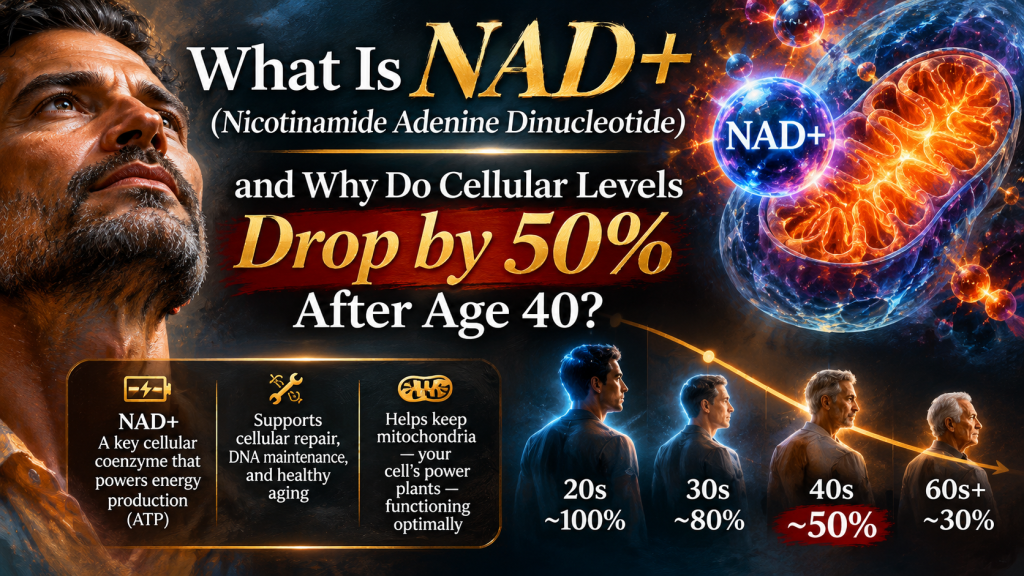
Nicotinamide Adenine Dinucleotide (NAD+) is precisely such a foundational system within our cells. This vital coenzyme, essential for energy production and DNA repair, typically sees its levels drop by a staggering 50% by the age of 40. This decline is not merely a sign of aging; it’s a primary driver, critically impacting cellular health and contributing directly to biological aging.
The reduction in NAD+ is orchestrated by a perfect storm of biological factors: increased consumption by enzymes like CD38 and PARPs, coupled with a diminished capacity for cellular recycling through pathways like NAMPT. Recognizing this “NAD+ gap” is the first step in strategically addressing age-related metabolic dysfunction and supporting overall vitality in 2026 and beyond.
Key Insights from My Desk on NAD+
From my vantage point, the science of NAD+ offers critical takeaways for anyone looking to optimize their cellular health:
- Master Coenzyme: NAD+ is non-negotiable. It’s the critical coenzyme for converting nutrients into ATP-cellular energy-and for fueling the complex machinery of DNA repair. No cellular process operates at peak efficiency without it.
- The 50% Threshold is Real: By the time we hit 40, our body’s NAD+ reserves are, on average, half what they once were. This isn’t random; it’s a consistent observation across numerous studies, signaling a significant shift in cellular metabolism.
- The CD38 “Drain”: Think of CD38 as a high-capacity, yet inefficient, shredder for NAD+. Triggered by chronic, low-grade inflammation-a phenomenon scientists call “inflammaging”-this enzyme aggressively depletes NAD+ levels, often before it can be used for vital functions.
- Repair Demands Escalate: As we age, our DNA accumulates damage from daily stressors. PARP enzymes, which are our cellular first responders to this damage, consume vast amounts of NAD+ to maintain genomic stability. This constant repair work diverts NAD+ from other critical longevity pathways.
- Recycling Failure: The body has an ingenious recycling system for NAD+, primarily managed by the NAMPT enzyme. Unfortunately, NAMPT becomes less efficient with age, akin to a recycling plant operating at half capacity, leading to a systemic crash in NAD+ availability.
- Restoration Methods Are Evolving: The scientific community is rapidly innovating. Beyond traditional precursors like NMN and NR, cutting-edge technologies, including stabilized NAD+ molecules and targeted delivery systems, are emerging to bypass cellular bottlenecks and directly replenish NAD+ stores.
Introduction to Nicotinamide Adenine Dinucleotide (NAD+): The “Currency of Life” Explained
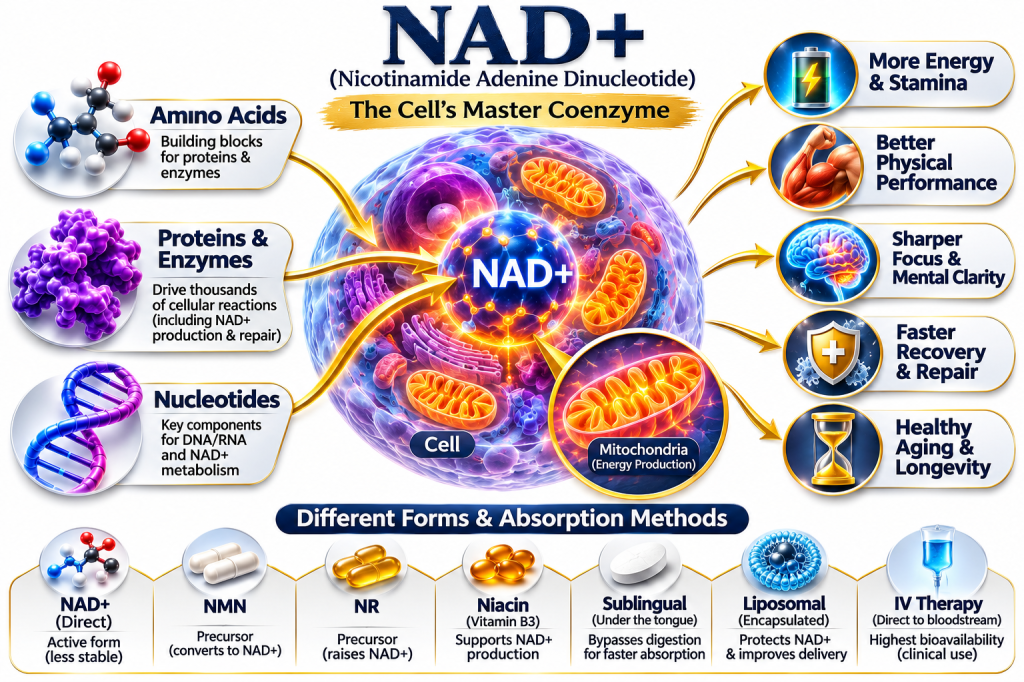
Nicotinamide Adenine Dinucleotide (NAD+) is a coenzyme derived from Vitamin B3 (niacin) that exists in two primary forms: NAD+ (the oxidized form) and NADH (the reduced form). In the scientific community, it is often referred to as the “currency of life” because no cell can function optimally without it. This ubiquitous molecule acts as a critical electron shuttle, facilitating countless chemical reactions by transferring electrons from one molecule to another. While its initial discovery dates back to 1906, its profound role in aging and longevity has only truly captivated medical research in the past two decades.
Early research viewed NAD+ primarily as a passive participant in metabolic processes. However, as our understanding has deepened, it has become unequivocally clear that NAD+ is a sophisticated signaling molecule. It communicates essential information to the body, influencing whether cells prioritize growth and replication or shift resources towards cellular protection and repair, a critical distinction as we navigate the complexities of aging.
The Indispensable Roles of NAD+ in Human Biology: A Legal and Scientific Perspective
From a strategic standpoint, the cellular imperative for NAD+ is akin to a foundational legal framework-without it, the entire system falters. My experience has taught me that strong foundations are non-negotiable, and in cellular biology, NAD+ provides that bedrock for two primary functions.
Energy Metabolism (ATP Production): Fueling the Cellular Engine
The most widely recognized function of NAD+ lies within the mitochondria-often termed the “powerhouse” of the cell. Here, through the intricate process of cellular respiration, the body efficiently breaks down glucose and fats to generate energy. NAD+ plays a pivotal role by accepting electrons during these breakdown processes, transforming into NADH. This NADH then delivers these high-energy electrons to the electron transport chain, a molecular assembly line that ultimately generates Adenosine Triphosphate (ATP). ATP is the universal chemical energy currency that powers every biological function, from the rhythmic beat of your heart to the intricate firing of your neurons and the contraction of every muscle. Without sufficient NAD+, this critical energy production becomes significantly compromised, leading to mitochondrial dysfunction that manifests as chronic fatigue and reduced physical stamina.
Cellular Maintenance and DNA Repair: Upholding Genomic Integrity
Beyond its role in energy production, NAD+ is an absolutely required substrate for several classes of enzymes that are instrumental in protecting and maintaining our genome. These are the cellular custodians, ensuring our genetic blueprint remains stable and functional as we age.
- Sirtuins (SIRT1-7): Often celebrated as “longevity genes,” sirtuins are a family of seven proteins that are heavily reliant on NAD+ for their activity. They act as critical regulators of cellular health, orchestrating processes like gene expression, managing the stress response, and even “turning off” certain aging-related genes. When NAD+ levels decline, sirtuin activity falters, impairing these vital longevity pathways.
- PARPs (Poly-ADP Ribose Polymerases): These enzymes are the cellular emergency response team, constantly monitoring and repairing damaged DNA. When our DNA strands are compromised by factors such as UV radiation, environmental toxins, or metabolic byproducts, PARPs are activated. Their activation, however, comes at a cost: PARPs “consume” substantial amounts of NAD+ to assemble the necessary repair machinery. This intense consumption highlights a critical competition for NAD+ resources within the cell.
The Inexorable Decline: Why NAD+ Levels Plummet by 50% After Age 40
The observed 50% drop in NAD+ levels by middle age isn’t a mere coincidence or a sign of the body’s diminishing capacity to produce this vital coenzyme. Instead, it’s a meticulously studied biological “perfect storm” where the demand for NAD+ begins to significantly outpace the body’s ability to synthesize and efficiently recycle it. This metabolic imbalance is a cornerstone of biological aging.
CD38: The “NAD+ Drain” in the Age of Inflammaging
Recent and ongoing research consistently identifies the enzyme CD38 as a primary architect of NAD+ depletion. CD38, a glycoprotein prominently found on the surface of immune cells, becomes significantly upregulated with age. This heightened activity is largely a consequence of “inflammaging,” a state of chronic, low-grade systemic inflammation that becomes more prevalent as we get older.
What makes CD38 particularly problematic is its inefficiency. For every single signaling molecule it produces, CD38 is estimated to destroy approximately 100 molecules of NAD+. As CD38 levels skyrocket in an aging body, it acts like a relentless “sinkhole,” aggressively draining the cellular NAD+ pool. This depletion occurs even before NAD+ can be utilized for critical functions like energy production or DNA repair. Studies, including those from the Buck Institute for Research on Aging, confirm that chronic inflammation is a direct driver of NAD+ decline via CD38 activation, presenting a significant target for therapeutic interventions in 2026.
PARP Activation: The Constant Demand of DNA Damage Control
With each passing year, our cells accumulate increasing amounts of DNA damage. This damage stems from a multitude of sources: constant oxidative stress, exposure to environmental pollutants, and metabolic byproducts. This relentless assault triggers a perpetual state of activation for PARP enzymes, our cellular guardians responsible for detecting and repairing these genetic lesions.
Unlike sirtuins, which utilize NAD+ more efficiently, PARPs are known as heavy consumers. In an aging cell, the incessant demand for DNA repair creates a significant “drain” on the available NAD+ pool. This leaves insufficient NAD+ for sirtuins, which are crucial for managing longevity pathways and maintaining overall metabolic health. Research indicates that PARP-1, in particular, can rapidly deplete cellular NAD+ pools under acute DNA damage stress, shifting it to become the dominant consumer over sirtuins in aged tissues.
The Failing Salvage Pathway (NAMPT): A Broken Recycling System
Our bodies have three primary mechanisms for synthesizing NAD+: the *De Novo* pathway (starting from tryptophan), the Preiss-Handler pathway (from niacin), and the highly efficient Salvage Pathway. The Salvage Pathway is by far the most crucial, as it efficiently recycles nicotinamide (a byproduct of NAD+ consumption) back into new NAD+.
The rate-limiting enzyme in this vital recycling loop is NAMPT (nicotinamide phosphoribosyltransferase). Unfortunately, scientific studies consistently demonstrate that NAMPT levels and its enzymatic activity decline significantly with age. When this essential recycling pump, NAMPT, becomes less efficient, the body struggles to “recharge” its NAD+ supply, leading to a systemic and precipitous crash in its cellular availability. This represents a fundamental breakdown in NAD+ homeostasis, compounding the issue of increased consumption by CD38 and PARPs.
The Far-Reaching Consequences of NAD+ Depletion: A Systemic Breakdown
When NAD+ levels plummet by 50% or more, the biological consequences are not isolated; they are systemic, impacting virtually every aspect of cellular and physiological function. As an expert in systemic optimization, I view this depletion as a cascade failure, undermining the very integrity of our biological systems.
- Mitochondrial Dysfunction: Without sufficient NAD+, the mitochondria-our cellular power generators-become “leaky” and inefficient. This directly translates to reduced ATP production, leading to pervasive chronic fatigue, diminished physical stamina, and a general decline in energy levels.
- Genomic Instability: Lower NAD+ means that PARP enzymes cannot adequately keep pace with the constant onslaught of DNA damage. This results in an accumulation of genetic mutations, which can trigger cellular senescence (where cells stop dividing and secrete pro-inflammatory signals) or, in more severe cases, increase the risk of malignant transformation.
- Metabolic Syndrome: The inactivity of sirtuins due to NAD+ depletion leads to poor regulation of blood sugar and fat metabolism. This contributes significantly to weight gain, increased visceral fat, insulin resistance, and a higher predisposition to type 2 diabetes and cardiovascular disease.
- Cognitive Decline: The brain, being the most energy-demanding organ, is particularly vulnerable to NAD+ depletion. Reduced NAD+ levels are intricately linked to diminished neuroplasticity, impaired neuronal function, and are implicated in the progression of neurodegenerative conditions such as Alzheimer’s and Parkinson’s disease.
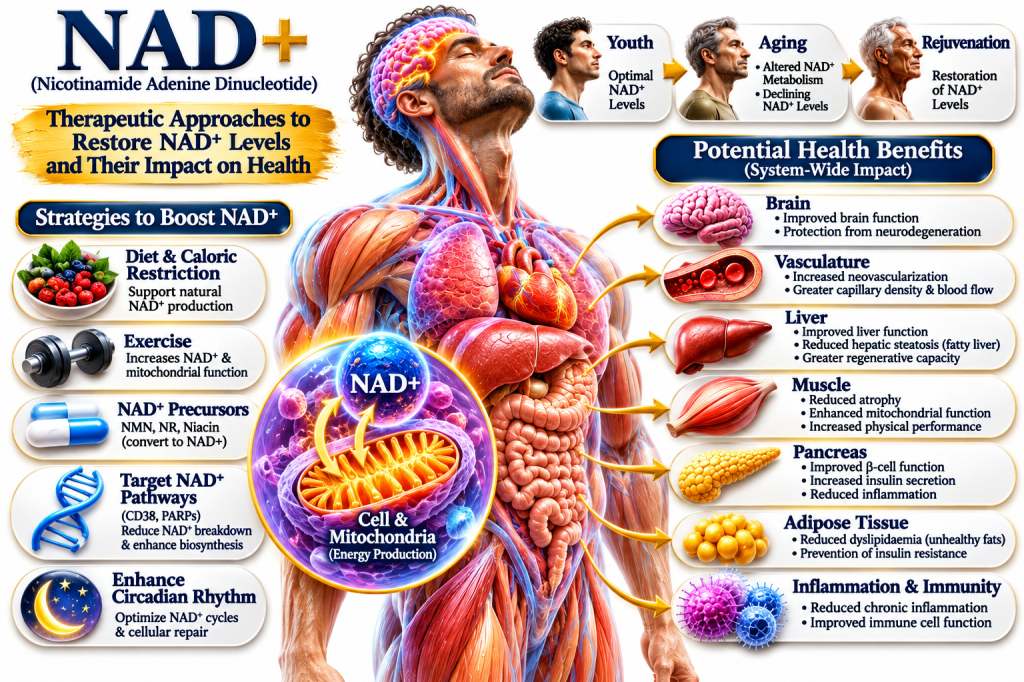
Strategies to Bolster NAD+ Levels
Addressing the NAD+ deficit requires a multi-faceted approach, combining lifestyle optimizations with targeted interventions.
Natural Lifestyle Interventions: The Foundation of Longevity
Before considering supplementation, it’s crucial to establish a strong foundation through lifestyle choices that naturally enhance NAD+ levels or mitigate its decline:
- Exercise: Regular physical activity, particularly high-intensity interval training (HIIT) and resistance training, has been consistently shown to increase NAMPT levels in muscle tissue, thereby boosting NAD+ recycling. Consistent exercise also helps reduce chronic inflammation, indirectly impacting CD38 activity.
- Time-Restricted Feeding (Intermittent Fasting): Fasting, when implemented strategically, triggers the body’s natural survival mechanisms. This includes stimulating the production of more NAD+ to activate sirtuins, which are crucial for cellular repair and metabolic efficiency.
- Circadian Alignment: Our internal biological clock profoundly influences NAD+ production and utilization. Maintaining a consistent sleep schedule and optimizing sleep quality helps synchronize this circadian rhythm, thereby supporting the natural efficiency of the NAD+ salvage pathway. Disrupted sleep patterns can impair NAD+ cycling.
Oral Precursors (NR and NMN): The “Building Block” Approach
The most widely recognized and utilized supplements for increasing NAD+ levels are Nicotinamide Riboside (NR) and Nicotinamide Mononucleotide (NMN). These molecules function as “building blocks” that the body’s cells convert into NAD+. While numerous studies confirm their ability to elevate NAD+ levels, particularly in the blood, it’s important to understand their pathway.
These precursors must undergo enzymatic conversion steps within the body, and they are also subject to “first-pass metabolism” in the digestive system and liver. This means a significant portion of their potency can be lost before the active NAD+ molecule reaches systemic circulation and individual cells, leading to variability in efficacy among individuals. However, clinical trials in 2025 and 2026 continue to show that both NMN and NR, typically at doses around 1000 mg/day, can effectively double whole-blood NAD+ concentrations in humans within weeks, and some studies report improvements in metabolic markers.
Clinical Interventions (IV and Injections): Targeted Recharge
For individuals seeking more rapid or direct replenishment of NAD+, NAD+ IV Therapy and subcutaneous or intramuscular injections offer an alternative. These methods bypass the digestive tract entirely, delivering NAD+ directly into the systemic circulation. This approach is often utilized for rapid “recharging” of cellular levels, particularly in cases of extreme fatigue, during addiction recovery protocols, or as part of intensive anti-aging regimens.
While often associated with immediate symptomatic relief, it’s crucial to note that as of 2026, rigorous randomized controlled trials specifically supporting NAD+ IV therapy for general anti-aging purposes in humans are limited. Clinical studies generally confirm its short-term safety and the ability to elevate NAD+ levels, though side effects like temporary chest pressure or nausea can occur with rapid administration.
Innovation: Stabilized NAD+ Technology – The Direct Approach
A significant hurdle in NAD+ science has always been the molecule’s inherent instability; native NAD+ degrades easily when exposed to factors like light, heat, or the harsh environment of the digestive system. However, groundbreaking new technologies are emerging that focus on stabilizing the NAD+ molecule itself for oral delivery.
By leveraging advanced delivery systems, such as specialized molecular structures or liposomal encapsulation, these innovations allow the actual NAD+ molecule to enter the cell directly. This bypasses the need for the body to perform the final conversion steps from precursors like NMN or NR, which can be inefficient or limited by age-related enzymatic decline. This represents a significant paradigm shift from merely “providing the ingredients” to “providing the finished product” in a bioavailable form the body can immediately utilize, potentially offering superior efficacy. Research in this area is rapidly evolving, promising a more direct and potent approach to NAD+ restoration.
Comparison of NAD+ Delivery Methods: Navigating Your Options
As you consider the best approach for bolstering your NAD+ levels, it’s helpful to compare the different methods available in 2026. Each has its own profile of benefits, limitations, and suitability based on individual needs and goals.
| Method | Bioavailability | Speed of Action | Primary Benefit | Key Limitation |
|---|---|---|---|---|
| Diet/Exercise | Natural | Slow | Sustainable, cost-free, holistic benefits | Limited by age-related NAMPT decline; may not offset significant depletion alone |
| Oral Precursors (NR/NMN) | Moderate to High | Medium | Convenient for daily use, clinically shown to raise blood NAD+ | Requires enzymatic conversion; subject to first-pass metabolism; efficacy can vary |
| NAD+ IV Therapy | 100% Direct | Immediate | Rapid systemic saturation, bypasses digestion | Expensive; requires clinical setting; potential side effects during infusion |
| NAD+ Injections | High Direct | Fast | Home administration possible; bypasses gut metabolism | Requires needles; potential site irritation; less systemic than IV |
| Stabilized NAD+ Tech | Very High | Fast | Bypasses precursor conversion; direct cellular entry for native NAD+ | Newer technology; potentially higher cost; long-term data still maturing |
Frequently Asked Questions (FAQ) with Sid Peddinti, Esq.
Let’s address some of the most common questions I encounter regarding NAD+ and its implications for longevity and health.
What is NAD+ (nicotinamide adenine dinucleotide) and why do cellular levels drop by 50% after age 40?
NAD+ is a critical coenzyme found in every living cell, essential for energy production, DNA repair, and overall cellular maintenance. Cellular levels typically drop by 50% by age 40 due to a multifaceted assault: increased destruction by the CD38 enzyme (triggered by chronic inflammation or “inflammaging”), a high and constant demand from DNA repair enzymes (PARPs) responding to accumulated genetic damage, and a significant decline in the body’s ability to efficiently recycle NAD+ through the NAMPT pathway.
Can I get enough NAD+ from food?
While foods such as broccoli, avocado, beef, chicken, and certain mushrooms contain trace amounts of NAD+ precursors like niacin (Vitamin B3), the concentrations are generally considered too low to meaningfully offset the significant 50% biological decline observed after age 40. While a healthy diet is foundational, achieving therapeutic levels of NAD+ to counter age-related depletion typically requires supplementation or clinical intervention.
What is the difference between NAD+ and NADH?
NAD+ and NADH are two forms of the same coenzyme, representing its oxidized and reduced states, respectively. NAD+ is the “oxidized” form, meaning it’s ready to accept electrons, particularly in energy-generating metabolic pathways. NADH is the “reduced” form, meaning it’s already carrying electrons and is ready to donate them to processes like the electron transport chain to produce ATP. The ratio of NAD+ to NADH is a crucial indicator of cellular metabolic health; a higher NAD+ ratio generally signifies a more youthful and efficient metabolism, while an imbalance can indicate metabolic stress.
Is it better to take NMN or NAD+ directly in 2026?
Historically, NMN and NR were the preferred choices because direct NAD+ molecules were too unstable to survive digestion and reach cells intact. However, with the advent of new stabilized NAD+ technologies, it is now becoming possible to orally supplement the actual, intact NAD+ molecule. This direct delivery may offer a more efficient pathway, as it bypasses the enzymatic conversion steps required for NMN and NR, potentially providing immediate cellular utilization of NAD+. The choice often depends on individual response, budget, and the specific formulation of the stabilized NAD+ product.
Are there side effects to increasing NAD+?
Most individuals tolerate NAD+ boosters, especially oral precursors like NR and NMN, quite well with minimal or no side effects reported in clinical trials. However, rapid intravenous (IV) administration of NAD+ can sometimes cause temporary side effects such as nausea, flushing, headaches, or a sensation of chest pressure, which typically resolve quickly. It’s crucial for individuals to consult a physician before initiating any NAD+ supplementation, particularly if they have active malignancies, as NAD+ fuels all cellular growth. Recent research, for example, explores the use of PARP inhibitors to deplete NAD+ in cancer cells, highlighting the complex relationship between NAD+ and cellular proliferation.
Reclaiming Your Vitality
Understanding the “NAD+ gap” by age 40 is more than just academic knowledge; it’s a critical insight for proactive longevity and vitality. If you’re over that threshold and grappling with unexplained fatigue, a noticeable metabolic slowing, or persistent cognitive fog, it’s highly plausible that your cellular NAD+ levels are indeed at their 50% depletion point.
Next Steps for Optimized Cellular Health:
- Assess Your Status: Engage with a longevity-focused physician or a knowledgeable wellness practitioner. They can help you explore options for testing your biological age or, where available and appropriate, direct NAD+ levels, though current blood tests may not always reflect tissue-specific levels accurately.
- Optimize Your Foundation: Prioritize and consistently implement natural lifestyle interventions. Integrate regular high-intensity interval training (HIIT), explore the benefits of time-restricted feeding, and rigorously align your sleep with your circadian rhythm. These are powerful, evidence-backed tools for supporting endogenous NAD+ pathways.
- Strategically Supplement: Explore the latest advancements in NAD+ restoration. This might mean high-quality oral precursors like NMN or NR, or, increasingly, novel stabilized NAD+ solutions designed for direct cellular entry. Always consider professional guidance to tailor supplementation to your unique biological needs and ensure it aligns with the evolving scientific landscape.
References & Authoritative Sources
The information presented in this article is supported by a comprehensive review of the latest scientific literature and authoritative sources, reflecting the current understanding in 2026.
- PARP-CD38-Driven NAD+ Loss in Immune Aging: An Emerging Mechanistic Framework
- Clinical evidence for the use of NAD + precursors to slow aging – Science Exploration Press
- NAD Therapy Anti-Aging Doctor Guide: What the 2026 Evidence Actually Shows
- NAD and Longevity: New Research Reveals Critical Role in Human Aging –
- Promising Results With NAD Supplementation in Rare Diseases With Premature Aging and DNA Damage – PMC
- Emerging Trends in NAD+ Peptide Research 2026: What Scientists Are Studying in Labs
- NAD+ Therapy: An Honest Look at What the Evidence Shows in 2026 | GlowCo
- Longevity Research News: 12 Anti-Aging Breakthroughs (2025–2026) – YourHealthier
- nad+ peptide studies whether the coenzyme formulae NAD + and NADH are safe and effective
- NAD+ and Aging 2026: Cellular Energy, Sirtuins & Longevity | Biohacker Alliance
- Restoring NAD+ pathways in brain aging and neurodegenerative diseases: roles of vitamin B3 metabolites, gut microbiota, and exercise in cognitive health – Frontiers
- The role of NAD+ metabolism and its modulation of mitochondria in aging and disease – PMC – NIH
- Pilot Human Study Supports Safety of NAD+ IV and NR IV Infusions
- NAD+ and Aging: What the Latest Research Says
- Blocking NAD+ Breakdown Improves Cognitive and Physical Performance: New Study
- NAD+ and Brain Health: What the Science Actually Says About Aging, Neurodegeneration, and Cognitive Function – AboutNAD
- Chronic inflammation causes a reduction in NAD+ – Buck Institute
- Clinical evidence for the use of NAD+ precursors to slow aging – ResearchGate
- NAD+ and DNA Repair: PARP Enzyme Research in Aging – Biohacker
- NAD+ Supplements: Benefits, Risks and Side Effects – AARP
- Newly Published Preclinical Study Demonstrates CD38 as a Driver of Age-Related NAD+ Decline, Older Mothers Have Lower NAD+ Levels in Placental Tissue, and NAD+ Restoration with Nicotinamide Riboside (NR) Improves Pregnancy Outcomes – Niagen Bioscience – Investor Relations
- (PDF) PARP-CD38-Driven NAD+ Loss in Immune Aging: An Emerging Mechanistic Framework – ResearchGate
- What Is Inflammaging? The Role of NAD+ in Chronic Inflammation and Aging – AboutNAD
- Anti-Aging Vaccine Boosts Strength, Memory & NAD+ in New Study
- NAD+ metabolism in PARP inhibitor resistance of ovarian cancer – NIH RePORTER
- NAD+ and the Aging Epigenome: The Metabolic Hub Science Just Found – Healthspan
- Rewinding the Clock: Emerging Pharmacological Strategies for Human Anti-Aging Therapy
- NAD+ DEPLETION AS A CAUSE OF INFLAMMAGING | Request PDF – ResearchGate
- Rejuvenation breakthrough: Scientists reverse 60 years of aging in human cells | ScienceDaily
- Unveiling the role of NAD glycohydrolase CD38 in aging and age-related diseases: insights from bibliometric analysis and comprehensive review – PMC
- PARP Inhibitors: Recent Research Advancements in Prostate Cancer (2025–2026)
- NAD+ consumption by PARP1 in response to DNA damage triggers metabolic shift critical for damaged cell survival – PMC
- NAD+ Depletion Primes Cells for Inflammatory Behavior – Fight Aging!
Keywords / Topics: Amino Acids, Peptides, Proteins, Enzymes, Nucleotides, NAD+, Mitochondria, ATP, MOTS-c, Bioenergetics, Human Performance, Metabolic Health, nicotinamide adenine dinucleotide, glaucoma, age-related macular degeneration, mitochondria

Leave a Reply