By: Sid Peddinti, Esq.
Biohacker, Lawyer, Researcher, and Publisher
Fellow BioHackers,
I started having conversations around biohacking with my “gym buddies” at LifeTime and found that 100% of them are “biohackers”. They have been investing thousands of dollars a year on all sorts of stuff: gym memberships, cryo, sauna, cold plunges, fitness programs, anti-aging creams, and an entire catalog worth of supplements and injectables – from NAD+, peptides, precursors, pre-and-post workout shakes and pills, and testosterone boosters, among other things.
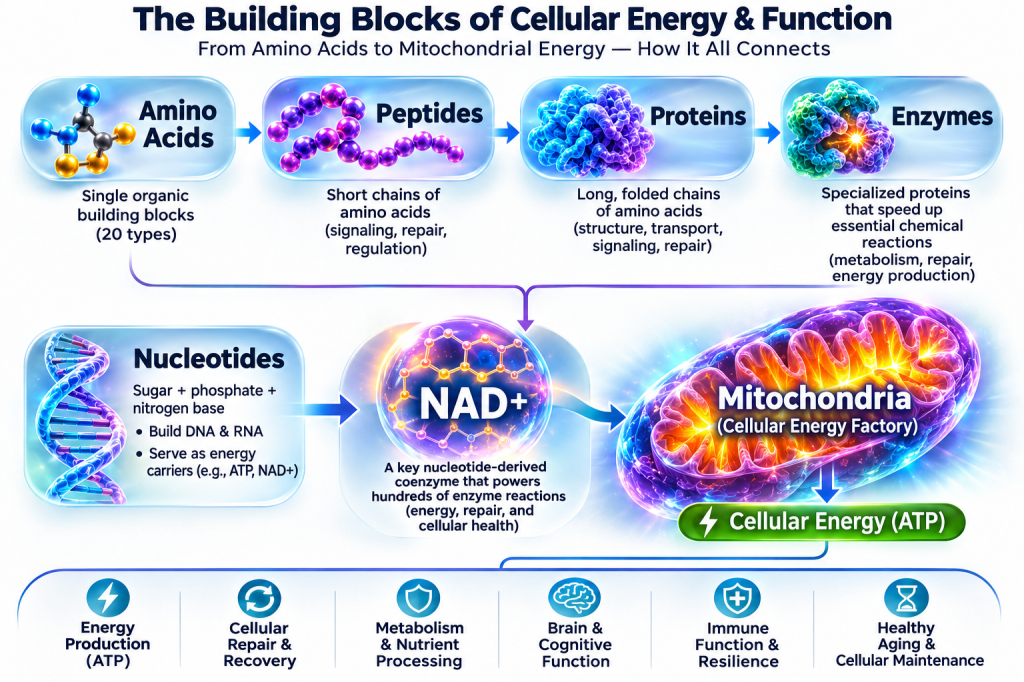
Well – that got me thinking about how all of these things relate to each other, and if they are related at all. This article provides a comprehensive analysis of these biomolecules, their synergistic relationship with cellular respiration, and their impact on systemic vitality.
Disclaimer: I’m not a doctor. Nothing contained in our magazines, courses, communities, or social profiles is medical advice. I’m conducting investigative research for myself and decided to publish it to help others researching this process as well. I hope you find value. Good luck in your biohacking quest.
The Molecular Hierarchy of Human Performance: Amino Acids, Peptides, Proteins, Enzymes, and Nucleotides in Mitochondrial Energetics
Comparison Table: Biomolecules at a Glance
| Molecule | Structure | Primary Function | Link to Energy/Mitochondria |
|---|---|---|---|
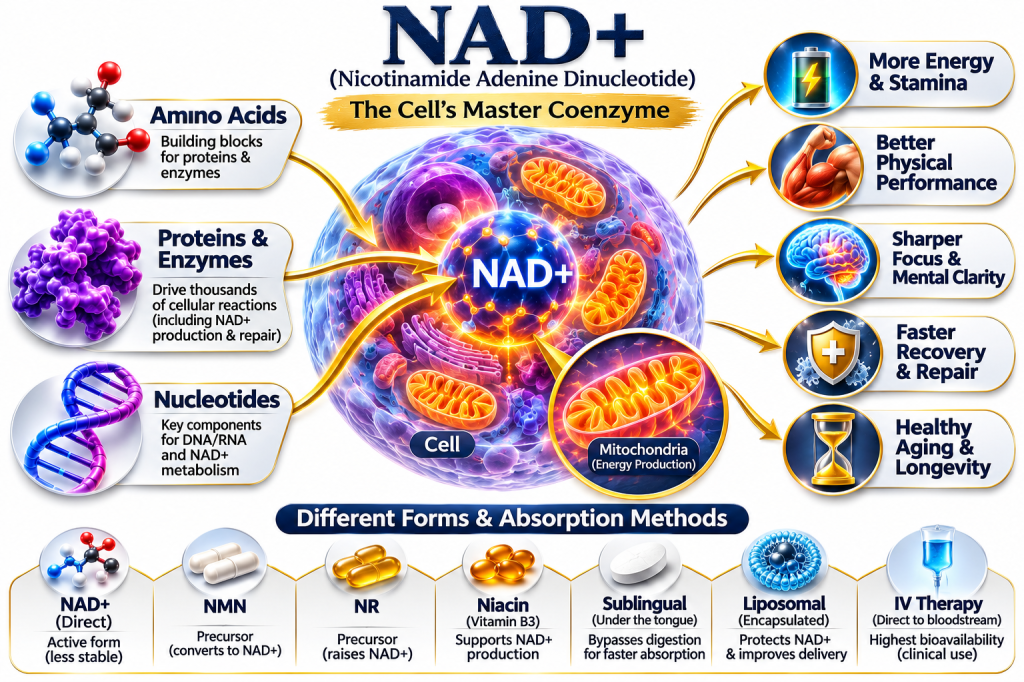
| Amino Acids | Single units (20 types) | Building blocks of all proteins | Precursors to NAD+ (Tryptophan) |
| Peptides | 2–50 amino acids | Signaling and regulation | MDPs (MOTS-c) regulate metabolism |
| Proteins | >50 amino acids (folded) | Structural and functional work | Form the Electron Transport Chain |
| Enzymes | Specialized proteins | Catalyze chemical reactions | Recycle NAD+ via the Salvage Pathway |
| Nucleotides | Base + Sugar + Phosphate | Genetic code and energy carriers | NAD+ and ATP are nucleotides |
Frequently Asked Questions (FAQ)
1. What exactly are amino acids, and why are they considered foundational?
Amino acids are the organic compounds that serve as the fundamental building blocks of proteins. Think of them as the individual LEGO bricks. Each amino acid contains an amino group, a carboxyl group, a hydrogen atom, and a unique side chain (R-group) – all attached to a central alpha-carbon atom. There are 20 standard amino acids that our bodies use, with nine being “essential” because they cannot be synthesized by the human body and must be obtained through diet. These essential amino acids are crucial not only for protein synthesis but also for various metabolic pathways, including energy production and neurotransmitter synthesis.
2. How do peptides differ from amino acids, and what is their primary role?
Peptides are short chains of amino acids linked together by peptide bonds. While amino acids are individual units, peptides are like short sequences of those LEGO bricks, typically ranging from 2 to 50 amino acids long. Beyond this length, they’re generally classified as proteins. Peptides perform a diverse array of biological functions. They can act as hormones, signaling molecules, neurotransmitters, or even antibiotics, influencing processes from digestion and immune response to pain perception and cellular growth.
3. What distinguishes proteins from peptides, and why are proteins so vital?
Proteins are much larger and more complex molecules than peptides, generally consisting of 50 or more amino acids folded into a specific three-dimensional structure. This intricate folding is crucial for their function. If amino acids are LEGO bricks and peptides are short sequences, then proteins are the elaborate structures built from those bricks. Proteins are the workhorses of the cell, performing an astounding variety of functions: they form structural components (like collagen), act as enzymes (catalyzing biochemical reactions), transport molecules (like hemoglobin carrying oxygen), facilitate cell signaling (like insulin), and are key players in immune responses (antibodies). The specific sequence of amino acids dictates the protein’s unique folding and, consequently, its biological role.
4. How do enzymes fit into this molecular hierarchy, and what makes them unique?
Enzymes are a special class of proteins that act as biological catalysts, meaning they speed up biochemical reactions without being consumed in the process. Their unique three-dimensional structures contain an “active site” that precisely fits specific substrate molecules, allowing them to facilitate reactions with incredible efficiency and specificity. Without enzymes, most biological reactions would occur too slowly to sustain life. They are essential for digestion, energy production, muscle contraction, and countless other cellular processes.
5. What are nucleotides, and what is their fundamental role in biology?
Nucleotides are organic molecules composed of three parts: a nitrogenous base (adenine, guanine, cytosine, thymine, or uracil), a five-carbon sugar (ribose or deoxyribose), and one to three phosphate groups. They are the monomeric units of nucleic acids – DNA and RNA. While their most famous role is carrying genetic information, nucleotides also play crucial roles in energy transfer (ATP, GTP), cellular signaling (cAMP), and acting as coenzymes (like NAD+ and FAD). The energy currency of the cell, adenosine triphosphate (ATP), is itself a nucleotide, highlighting their direct involvement in powering all cellular activities.
6. What is NAD+, and why is it so critical for cellular function?
NAD+, or nicotinamide adenine dinucleotide, is a vital coenzyme found in all living cells. It’s a derivative of vitamin B3 (niacin). NAD+ exists in two forms: NAD+ (the oxidized form) and NADH (the reduced form). It functions as a crucial electron carrier in metabolic reactions, essentially acting like a shuttle bus for electrons. In catabolic reactions (energy-releasing), NAD+ accepts electrons and a hydrogen ion to become NADH. In anabolic reactions (energy-requiring), NADH donates electrons and a hydrogen ion, reverting to NAD+. This continuous cycling between NAD+ and NADH is fundamental for energy production, DNA repair, gene expression, and maintaining cellular health.
7. How are mitochondria related to energy levels and overall performance?
Mitochondria are often called the “powerhouses of the cell” because they are responsible for generating the vast majority of the cell’s supply of adenosine triphosphate (ATP), the primary energy currency. Through a process called cellular respiration, mitochondria break down glucose and other fuel molecules to produce ATP. This process involves the electron transport chain, which is highly dependent on NAD+ and FAD. Healthy, functional mitochondria are paramount for sustained energy levels, physical performance, cognitive function, and cellular resilience.
8. How do amino acids specifically link to NAD+ production and mitochondrial health?
Amino acids are directly involved in NAD+ synthesis and support mitochondrial health in several ways. Tryptophan, an essential amino acid, serves as a precursor to NAD+ through the kynurenine pathway, meaning our bodies can convert tryptophan into NAD+. Other amino acids, like aspartate, are crucial for the malate-aspartate shuttle, a system that transports electrons into the mitochondria for ATP production. Furthermore, amino acids are needed to synthesize mitochondrial proteins, which are essential for maintaining the organelle’s structure and function.
9. What role do peptides play in modulating NAD+ and mitochondrial function?
Peptides can significantly influence NAD+ levels and mitochondrial function, often through signaling pathways. For example, certain regulatory peptides, such as humanin and MOTS-c, have been identified as mitokines – peptides that communicate between mitochondria and other parts of the cell. MOTS-c, in particular, has been shown to improve glucose metabolism and increase insulin sensitivity, partly by influencing mitochondrial processes and potentially impacting NAD+ dependent pathways. Other peptides may also act as precursors for larger proteins involved in NAD+ synthesis or mitochondrial protection.
10. How do proteins facilitate the intricate relationship between NAD+ and mitochondria?
Proteins are absolutely central to the NAD+-mitochondrial axis. Firstly, the enzymes that catalyze NAD+ synthesis from its precursors (like nicotinamide mononucleotide adenylyltransferase or NMNAT) are proteins. Secondly, the entire machinery of the electron transport chain within the mitochondria, where the vast majority of ATP is produced, is composed of protein complexes. These complexes rely on NAD+ (converted to NADH) to deliver electrons. Furthermore, sirtuins, a family of NAD+-dependent protein deacetylases, are crucial for regulating metabolism, DNA repair, and mitochondrial biogenesis, meaning their activity is directly tied to NAD+ availability.
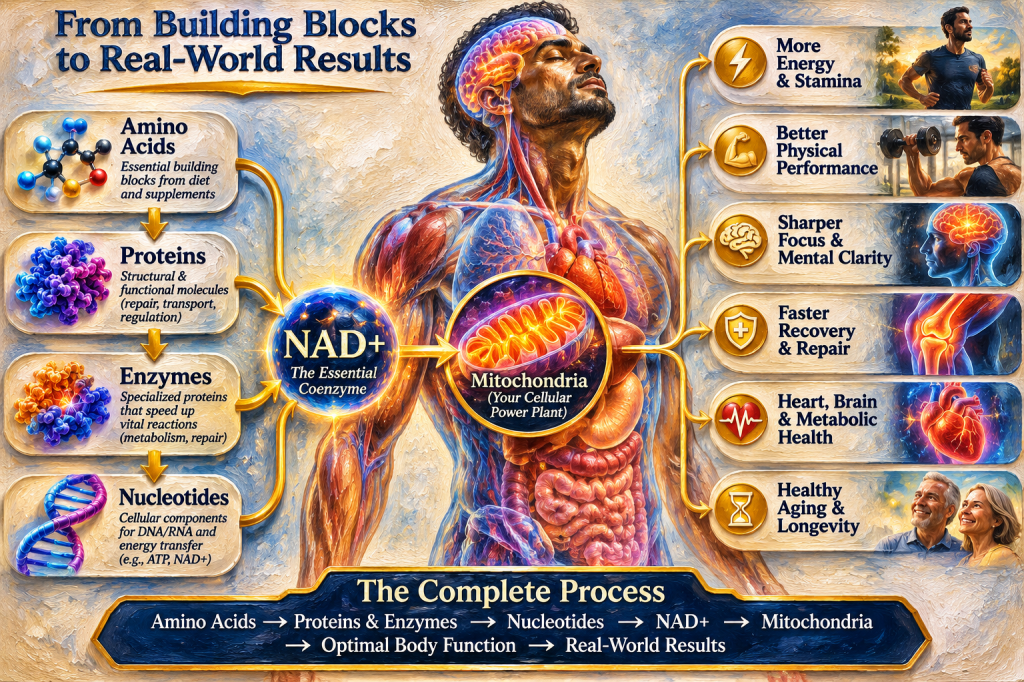
11. In what specific ways do enzymes utilize NAD+ within the mitochondria to generate energy?
Enzymes are the direct actors that utilize NAD+ (and convert it to NADH) within the mitochondria for energy generation. During the citric acid cycle (Krebs cycle) and glycolysis, specific dehydrogenase enzymes remove hydrogen atoms (and their electrons) from fuel molecules. These electrons are then transferred to NAD+, reducing it to NADH. This NADH then carries these electrons to the electron transport chain within the inner mitochondrial membrane. Here, other enzyme complexes facilitate the sequential transfer of these electrons, ultimately generating a proton gradient that drives ATP synthase, another enzyme complex, to produce large amounts of ATP.
12. Beyond genetics, what roles do nucleotides play in energy, NAD+, and mitochondria?
Beyond their genetic roles, nucleotides are profoundly involved in energy, NAD+, and mitochondrial function. As mentioned, ATP is the direct energy currency, essentially a modified nucleotide. Guanosine triphosphate (GTP), another nucleotide, is also used in some energy-transfer reactions. Moreover, NAD+ itself is a dinucleotide, formed from two nucleotide units joined together. Its precursor, nicotinamide mononucleotide (NMN), is also a nucleotide. Therefore, the very architecture of this crucial coenzyme is built upon nucleotides. Additionally, cyclic AMP (cAMP), a signaling nucleotide, is involved in regulating many metabolic pathways, including those affecting mitochondrial function and energy balance.
13. How does the availability of these biomolecules impact overall functioning and performance?
The availability and proper functioning of amino acids, peptides, proteins, enzymes, and nucleotides fundamentally dictate overall physiological functioning and performance. A sufficient supply of essential amino acids ensures adequate protein synthesis for muscle repair, enzyme production, and neurotransmitter synthesis. Optimal peptide signaling influences hormonal balance and metabolic regulation. Robust protein structures support cellular integrity and transport. Efficient enzymes ensure rapid and effective biochemical reactions, including those generating ATP. And readily available nucleotides are critical for energy storage (ATP), genetic integrity, and the synthesis of coenzymes like NAD+. Deficiencies or dysfunction in any of these areas can lead to impaired energy production, reduced cellular repair, diminished cognitive function, and decreased physical performance. The World Health Organization consistently emphasizes the role of balanced nutrition in supporting these biomolecular processes for optimal health.
14. Can diet directly influence NAD+ levels and mitochondrial health through these components?
Absolutely. Diet is a primary driver of NAD+ levels and mitochondrial health by supplying the necessary precursors for these biomolecules. Foods rich in tryptophan (e.g., poultry, eggs, seeds) contribute to NAD+ synthesis. Vitamin B3 in its various forms (niacin, nicotinamide, nicotinamide riboside) found in meats, fish, and fortified cereals, are direct precursors to NAD+. Antioxidant-rich foods help protect mitochondria from oxidative stress. A diet providing a full spectrum of amino acids ensures the synthesis of essential mitochondrial proteins and enzymes. Furthermore, nutrients like magnesium and B vitamins are cofactors for many enzyme activities vital for energy metabolism.
15. What is the observable impact of optimal NAD+ and mitochondrial function on energy levels?
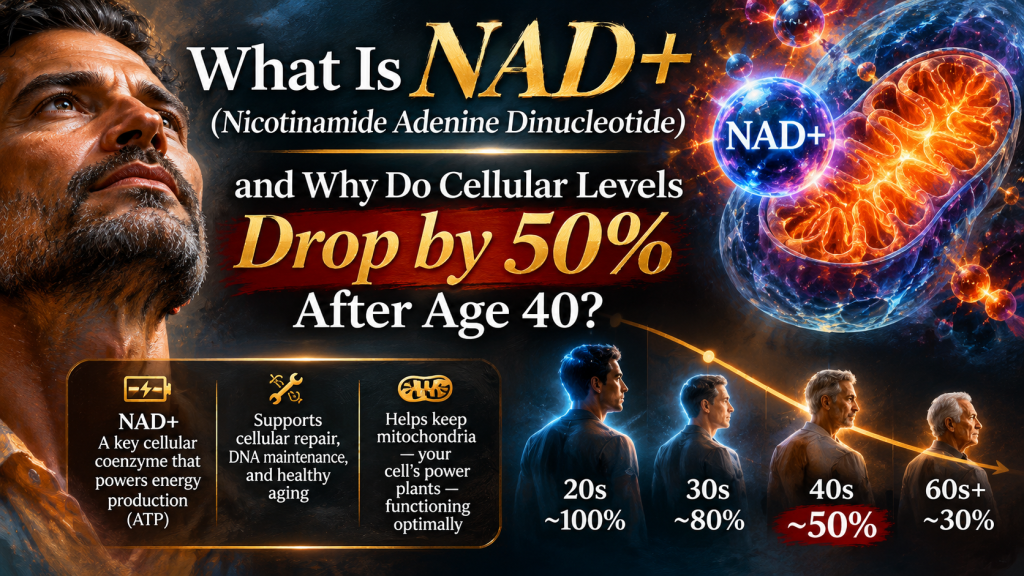
The observable impact of optimal NAD+ and mitochondrial function on energy levels is profound. Individuals with robust NAD+ levels and highly efficient mitochondria typically experience sustained energy throughout the day, reduced fatigue, improved stamina during physical activity, and quicker recovery. They often report better mental clarity and focus, as the brain is a highly energy-demanding organ. Conversely, declining NAD+ levels, often associated with aging, and mitochondrial dysfunction are hallmark features of chronic fatigue, reduced endurance, and cognitive decline.
16. How do these biological components collectively contribute to cellular resilience and repair?
These biological components work in concert to enhance cellular resilience and repair. Amino acids are the raw materials for repairing damaged proteins and synthesizing new cellular structures. Peptides can act as signaling molecules that initiate repair processes or protect cells from stress. Proteins, particularly enzymes, are directly involved in DNA repair mechanisms, detoxification pathways, and the removal of damaged cellular components (autophagy). NAD+ itself is a crucial cofactor for DNA repair enzymes (PARPs) and sirtuins, which regulate stress responses and cellular longevity. Healthy mitochondria produce less reactive oxygen species (ROS) and efficiently clear damaged components, preventing further cellular harm.
17. Are there specific amino acids or peptides currently being studied for their direct impact on NAD+ or mitochondria?
Yes, significant research is ongoing. Beyond tryptophan for NAD+ synthesis, researchers are investigating the therapeutic potential of various amino acids and peptides. For instance, L-carnitine and creatine, while not directly NAD+ precursors, support mitochondrial function by facilitating fatty acid transport and ATP regeneration, respectively. Specific synthetic peptides are being developed to target mitochondrial dysfunction. For example, some peptides are designed to improve mitochondrial dynamics, reduce oxidative stress within mitochondria, or even enhance the function of specific mitochondrial enzymes.
The field of peptide therapeutics, especially those targeting metabolic pathways and mitochondrial health, is rapidly expanding, with numerous clinical trials underway in 2026, as tracked by the ClinicalTrials (dot) gov database.
18. How do the concepts of longevity and healthy aging relate to NAD+ and mitochondrial optimization through these biomolecules?
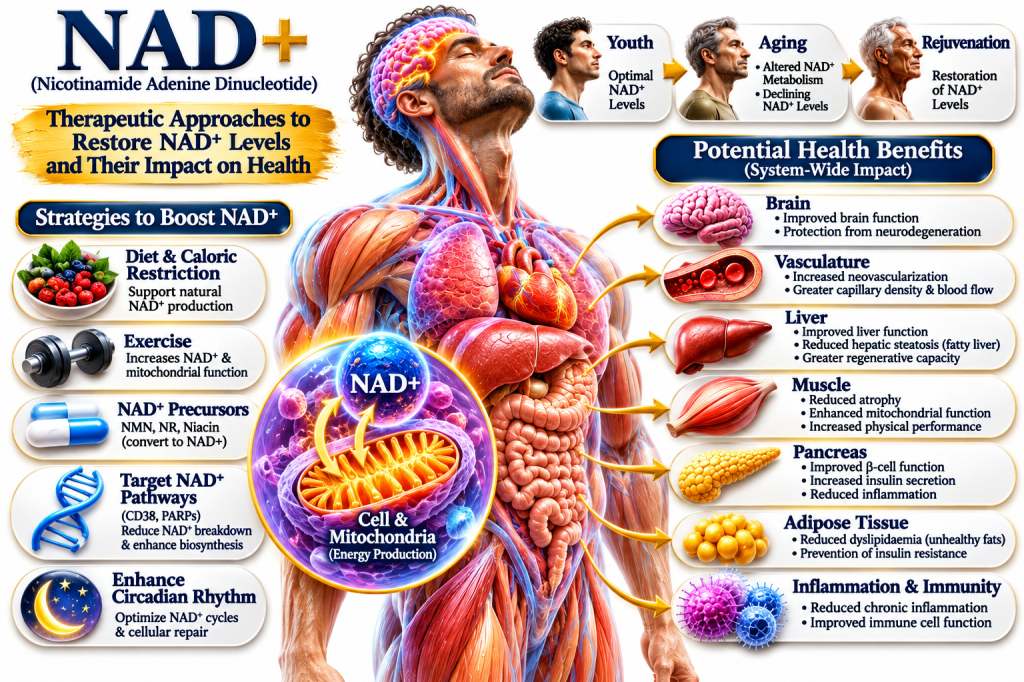
Longevity and healthy aging are inextricably linked to the optimization of NAD+ and mitochondrial function, facilitated by these biomolecules. As we age, NAD+ levels naturally decline, and mitochondrial function often becomes impaired, leading to a cascade of age-related issues. By ensuring adequate availability of amino acids, peptides, and the enzymes and nucleotides necessary to maintain robust NAD+ synthesis and efficient mitochondrial performance, we can potentially mitigate some aspects of aging. This includes maintaining cellular repair mechanisms, reducing chronic inflammation, and preserving tissue function.
19. What are the key takeaways for individuals looking to optimize their energy and performance based on this understanding?
- For individuals seeking to optimize energy and performance, the key takeaways are multifaceted. First, prioritize a balanced diet rich in essential amino acids, B vitamins (especially B3 precursors), and antioxidants to provide the building blocks and cofactors for optimal cellular function.
- Second, consider lifestyle factors like regular exercise, which is a known stimulant for mitochondrial biogenesis and improved NAD+ metabolism. Third, understand that these systems are interconnected – supporting one aspect, such as protein synthesis through adequate amino acid intake, often has ripple effects that benefit NAD+ and mitochondrial health.
- Finally, consult with healthcare professionals to discuss personalized strategies, especially concerning supplements, as the science of NAD+ boosters and mitochondrial support continues to evolve rapidly in 2026. Informed choices, grounded in scientific understanding, are crucial.
20. What emerging research areas are exciting for the future understanding of these connections?
The future understanding of these connections is incredibly exciting. Some key emerging research areas include the development of novel peptide therapeutics that specifically target mitochondrial dysfunction or enhance NAD+ synthesis pathways. Gene editing technologies are being explored to correct genetic predispositions to mitochondrial diseases. The study of the “NADome” – the entire network of NAD+-dependent enzymes and their substrates – is providing a more holistic view of cellular metabolism.
Furthermore, personalized nutrition, guided by epigenetics and metabolomics, is gaining traction to tailor dietary interventions for optimal NAD+ and mitochondrial health based on individual genetic profiles and metabolic needs. The convergence of AI and biotechnology is also accelerating drug discovery for NAD+ and mitochondrial modulators, pointing to a future where precision interventions are commonplace.
Thanks for reading.
Cheers,
Sidhartha, Esq.
—
References & Sources
- 1. Wikipedia:Amino Acids, Peptides, NAD+.
- 2. Frontiers in Physiology: Mitochondrial-Derived Peptides in Metabolism.
- 3. National Institutes of Health (NIH): The Role of NAD+ in Aging and Disease.
- 4. Cleveland Clinic: Mitochondria and Cellular Energy.
- 5. Journal of Clinical Investigation: MOTS-c as a Regulator of Insulin Sensitivity.
- 6. Molecular Cell: The Biology of Sirtuins and NAD+ Catalysis.
Keywords / Topics: Amino Acids, Peptides, Proteins, Enzymes, Nucleotides, NAD+, Mitochondria, ATP, MOTS-c, Bioenergetics, Human Performance, Metabolic Health, nicotinamide adenine dinucleotide, glaucoma, age-related macular degeneration, mitochondria

Leave a Reply